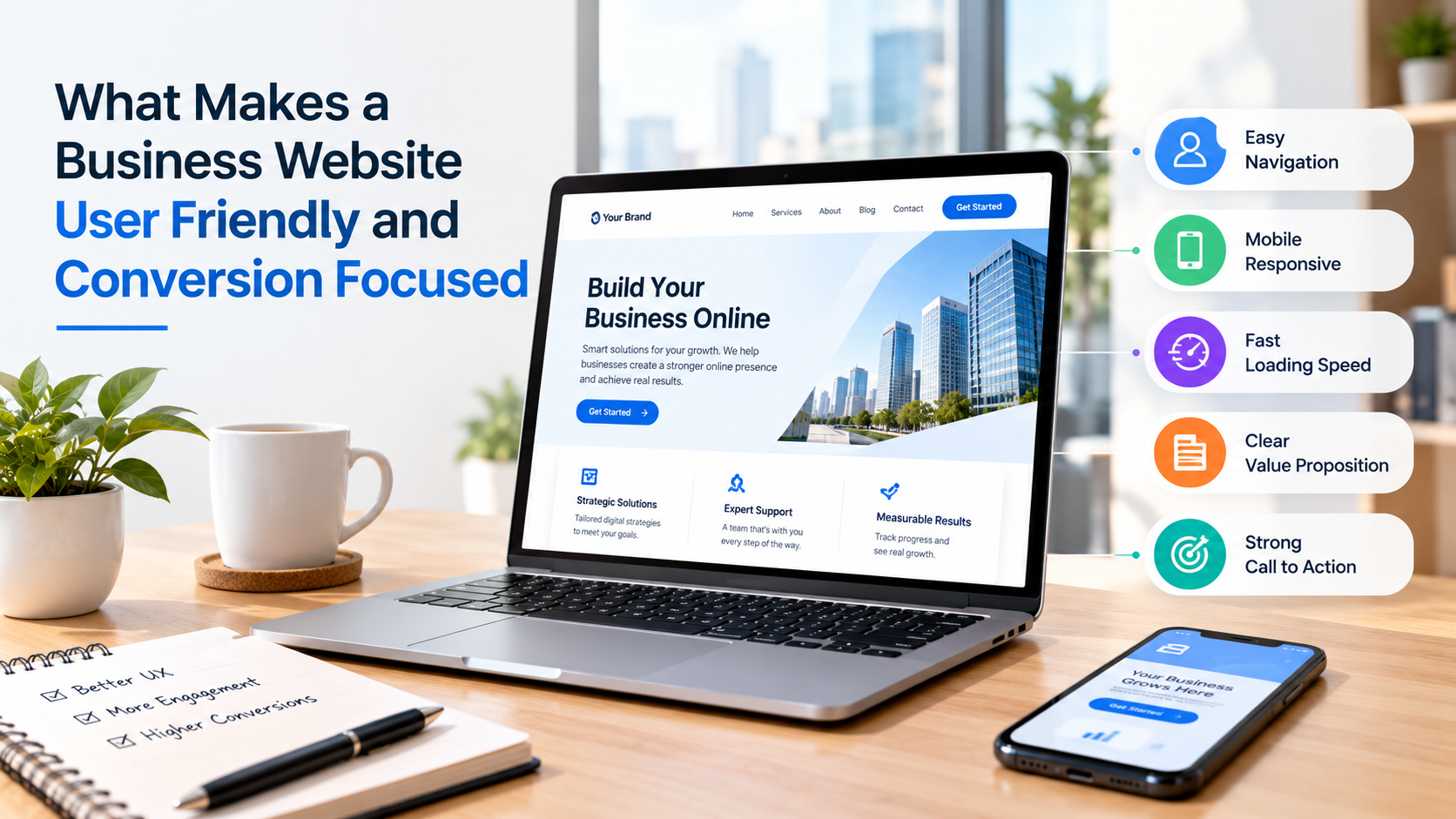
What cc Website User Friendly and Conversion Focused
Customers usually learn about a company on its website. Most people visit a business site before calling, visiting, or purchasing something. With a confusing, slow, hard-to-use website, visitors can quickly leave. An easy-to-use site helps people find information and makes a strong first impression.
Explanations are the Following:
A conversion-oriented site is more than just visually appealing. It guides visitors to take helpful actions, such as making a purchase, completing a contact form, booking a service, or requesting more information. Combining good design with clear business objectives can bring visitors to the site and convert more of them into customers.
Easy and Uncomplicated Navigation
Good navigation makes a website easy to navigate. Visitors must quickly learn where to find products, services, contact details, and key information. The primary menu must use simple labels and avoid extra choices.
An easy-to-use navigation system avoids confusion, and visitors won’t waste time clicking through multiple pages to reach the right page. Key pages should also be easy to access from other sections of the website.
Quick Loading of Web Page
Website speed heavily influences the user experience. People do not want to wait a few seconds for a page to load. A slow website may make people leave before they learn about a product or service.
To speed up a site, businesses can optimize images, remove unnecessary features, and use reliable hosting. Faster pages load more easily in browsers and may motivate people to read more on the site.
Mobile-Friendly Design
Many people use smartphones to find businesses, products, and services. This makes mobile-friendly design a key part of an effective site. A website must be responsive to various screen sizes.
Text should be legible, buttons should be easy to tap, and images should fit the display. Responsive design gives users a comfortable experience regardless of the device they he to navigate the site: a phone, tablet, or computer. Collaborating with a UI/UX Design Company in Dubai can help improve layouts, navigation, user experience, mobile functionality, and conversion-focused features.
Legible and Helpful Content
Visitors should understand a business’s offer within a few seconds of visiting. Such websites should use simple language and clearly describe products, services, benefits, and key details.
Long blocks of dense text can be harder to read. Short paragraphs, informative headings, and helpful descriptions make the site easy to use so that visitors can find answers quickly. Quality information can also build trust and support search engine optimization.
Effective Calls to Action
A site should give readers a clear next step. Calls to action, also known as CTAs, lead users to key actions. Examples are Get a Quote, Contact Us, Book Now, or Buy Now.
CTAs must be noticeable without making the page feel overcrowded. Action-oriented, easy-to-understand words help visitors understand the next step.
Attractive But Simple Design
A professional site must be appealing yet user-friendly. Too much color, animation, images, or design effects can confuse visitors about the intended message.
White space and consistent colors, clear fonts, and a logical layout make the experience more enjoyable. Each design element must serve a purpose and help the user on their way.
Easy-to-Use Contact Forms
Contact forms are important for businesses that want to generate leads. However, visitors may not fill out forms that require too much information. It may be simpler to reach out to people with a form that requires the fewest fields.
It should also be mobile-compatible. Clear labels and helpful messages help prevent errors and make the process more comfortable.
Develop Relationships based on the Right Things
Trust is necessary when visitors request purchases or submit information. Show customer reviews, testimonials, certifications, and contact and company information to build trust.
Websites that collect personal or payment details also need secure payment and privacy. When people feel secure, they are more likely to take action.
Emphasize What the User Needs
An easy-to-use site starts with understanding the intended audience. Businesses should focus on what visitors want to know, the problems they need to solve, and what they are likely to do.
Businesses can work with professional experts to design websites that balance appealing design with usability.
Make it Easy to Buy
For e-commerce websites, the purchasing experience must be easy, from product selection through payment. Customers must be able to view pricing, product details, shipping, and payment options without confusion.
Protracted checkout will cause abandoned carts. With convenient checkout procedures and trusted payment options, customers feel more confident making purchases.
Try Out and Refine the Site
A website should not be considered a one-time project. Customer needs and internet trends change dynamically. Companies should regularly test website performance and user behavior.
Experimenting with headlines, buttons, layout, and forms can show what works best. Website analytics can also help businesses see which pages are used and where people leave.
Conclusion
A business website should be simple, fast, clear, mobile-friendly, and easy to navigate, and it should be user-friendly and conversion-oriented. Strong content, clear calls to action, simple forms, and trust-building factors can also make visitors feel more comfortable. Features can also guide users toward meaningful actions. The bottom line is to develop a site that is visitor-friendly and business-friendly. When people can quickly find information and meet their needs without getting lost, companies have a better chance of generating leads, making sales, and building a healthy customer relationship. The site can be useful and effective as the business expands by regularly testing and improving it.
Leave a Reply